
Picatinny vs. Weaver Rails: Key Differences, Compatibility & Mounting Standards
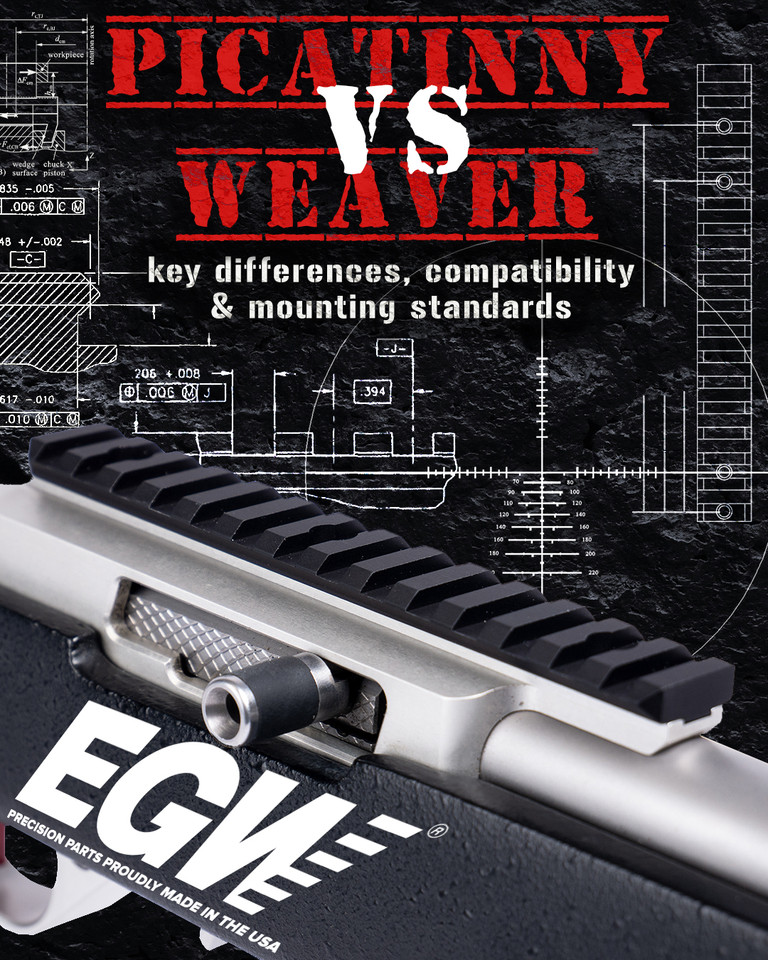
Picatinny Rails vs. Weaver Rails: What’s the Difference?
When it comes to mounting optics and accessories on firearms, two names consistently stand out: Picatinny rails and Weaver rails. Although they look similar at first glance, these two systems are not always interchangeable. Understanding the differences between them is essential for shooters, hobbyists, and professionals who want to ensure proper compatibility and performance.
Quick Definition: A Picatinny rail (also called a Picatinny scope base or MIL-STD-1913 rail) is a standardized mounting platform with repeatable slot dimensions designed for consistent ring fitment and reliable zero retention.
A Quick History of the Rail Systems
The Weaver rail was developed in the 1930s by William Ralph Weaver. It was one of the first standardized mounting systems for scopes, using a series of slots to secure optical sights to rifles. This design was groundbreaking at the time but had limitations when it came to universal compatibility.
Fast forward to the 1990s, the Picatinny rail, also known as the MIL-STD-1913 rail, was developed by the U.S. military to provide a standardized mounting platform across various weapon systems. Named after the Picatinny Arsenal in New Jersey, the rail was derived from the original Weaver design but with significant modifications to standardize dimensions and improve durability under combat conditions.
Key Differences Between Picatinny and Weaver Rails
While both systems use a series of slots, the differences come down to dimensions, spacing, and standardization.
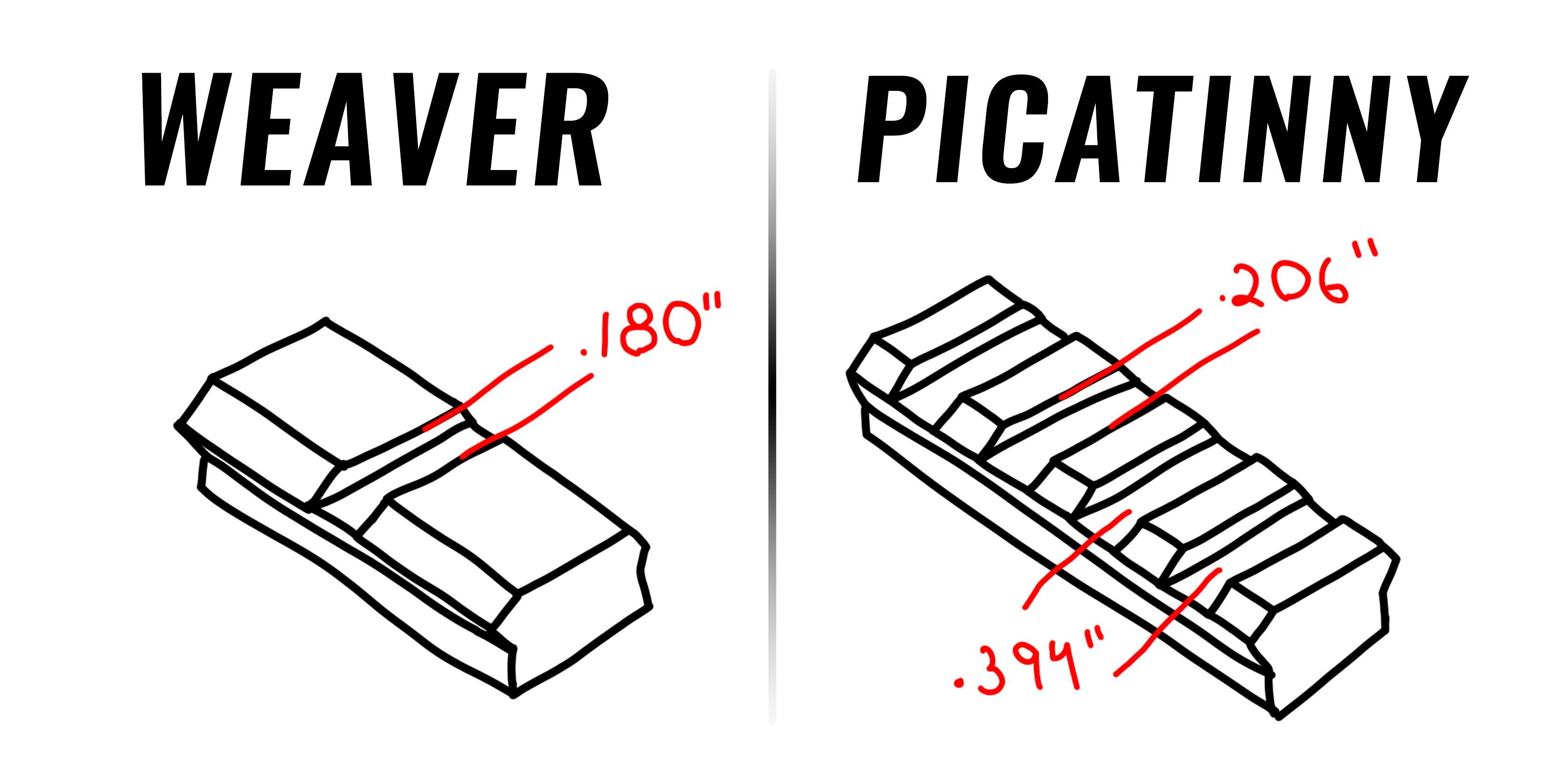
At a glance
- Slot Width: Picatinny slots are 0.206". Weaver slots are generally narrower (commonly around 0.180"), but can vary by manufacturer.
- Slot Spacing: Picatinny spacing is standardized at 0.394" center-to-center. Weaver spacing is not standardized and can vary.
- Recoil Slot Depth & Shape: Picatinny uses a square-bottom recoil slot profile designed for consistent engagement with recoil lugs. Weaver slot depth is not universally standardized and is often shallower, which can prevent some Picatinny accessories from fully seating.
Key takeaway: Picatinny (MIL-STD-1913) is standardized for repeatability and compatibility. Weaver can work well, but its variability is exactly why certain Picatinny-specific accessories won’t fit Weaver bases.
Are Picatinny and Weaver Accessories Interchangeable?
This is one of the most frequently asked questions—and the answer is nuanced.
Cross-compatible accessories: Lightweight optics or accessories that use a single locking crossbolt can often mount on either system. If you use Weaver-style rings on a Picatinny rail, push the rings forward in the slot so the crossbolt seats against the front of the recoil slot under recoil.
Where problems happen: Many Picatinny accessories rely on true MIL-STD-1913 slot geometry for proper lock-up (especially multi-lug designs). Weaver bases may be too narrow or inconsistent to accept them reliably.
If you’re upgrading to the more universal standard, browse our most popular EGW Picatinny rails built for repeatable fitment and zero retention.
The Industry Shift Toward MIL-STD-1913
The firearms and accessories industry has increasingly moved toward MIL-STD-1913 standardization because it reduces fitment guesswork and improves compatibility across optics, mounts, and accessories. For most modern use cases, Picatinny is the safer, more universal choice.
EGW Scope Mounts & Rings – Built for Both Rails
At EGW, we’ve designed our scope mounts and rings to provide shooters with maximum compatibility and performance.
- ✅ Our scope rings are engineered in the Weaver style, making them compatible with both Picatinny and Weaver rails.
- ✅ Our scope bases and rails are built to MIL-STD-1913 specifications for a secure, repeatable fit with optics and accessories.
Whether you’re mounting a red dot on an AR-15 or a long-range scope on a bolt-action rifle, EGW’s precision-machined components provide the durability and repeatability serious shooters demand.
Browse our mounts and rings here:
EGW Scope Mounts, Bases, Rails & Rings
While Weaver rails paved the way for modern mounting systems, Picatinny rails have become the industry standard due to their repeatability, consistency, and universal fit. Choosing the right rail system ensures seamless installation and dependable performance.
Newest Guide & Blog Updates

Springfield Prodigy Mag Catch Upgrade - EGW HD Machined Tool Steel
Springfield Prodigy Mag Catch Upgrade: EGW HD Machined Tool Steel The ultimate upgrade for reliable...

Why Fully Machined 1911 Ignition Components Outperform MIM
The Heart of the Crisp Break: Why Fully Machined Ignition Components Outperform MIM In the world o...
EGW CZ Scope Mounts: Converting Dovetail Rails to Picatinny
EGW CZ Scope Mounts – Why CZ Dovetail Rails Are Different (and Why Shooters Love Them) CZ rifles ha...

Is Your Shotgun Ready for Spring Turkey?
Gear Up for Gobblers: The Ultimate Guide to EGW Turkey Hunting Parts "The margin for error in the tu...

Which Browning X-Bolt Scope Base Do I Need? (X-Bolt I vs. X-Bolt II)
Browning X-Bolt vs. X-Bolt II: The Definitive Guide The release of the Browning X-Bolt II has broug...

Holosun 509T Mounts – EGW RMR Dovetail & Picatinny Solutions
Holosun 509T + EGW RMR Mount The Toughest & Most Affordable Setup in 2025 If you are looking for t...