
9mm Chamber Checkers Explained: Standard vs. Major vs. Ogive
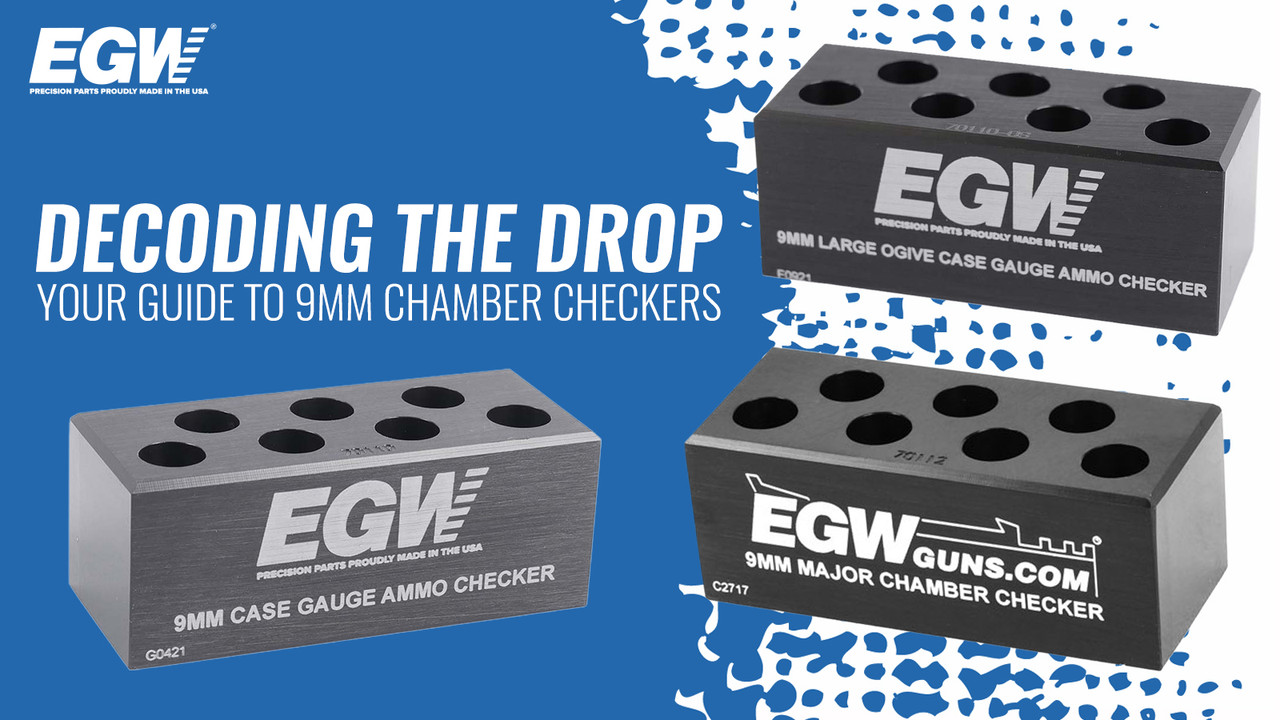
Decoding the Drop: Standard vs. Major vs. Ogive 9mm Chamber Checkers
If you're a reloader, you know the satisfaction of turning a pile of components into reliable, accurate ammunition. You also know the frustration of a malfunction, especially one that could have been prevented. That's where the humble chamber checker, or case gauge, comes in. It's your first line of defense in quality control, ensuring your finished rounds will chamber properly.
But a quick search online reveals it's not so simple. You'll find "Standard," "9mm Major," and "Ogive" checkers. What's the difference? Using the wrong one can be just as confusing as using none at all.
Let's break down what each tool does and help you choose the right one for your reloading bench.
The Foundation: The Standard 9mm Chamber Checker
This is the most common type of case gauge and the one every 9mm reloader should probably own first.
What It Is:
A standard chamber checker is machined to the minimum specifications set by SAAMI (Sporting Arms and Ammunition Manufacturers' Institute). Think of it as a "worst-case scenario" chamber. If your round fits in this gauge, it should theoretically fit and function in any 9mm firearm that is in spec.
What It Checks:
It primarily verifies that the brass case has been properly resized. It checks for correct case diameter (both at the mouth and base), case length, and ensures the rim is not damaged. It gives you a simple "go/no-go" for the case itself.
Who It's For:
This is the workhorse for the vast majority of reloaders. If you're loading practice ammo, self-defense rounds, or competing in divisions like USPSA Production or IDPA, where you aren't pushing pressures to the absolute limit, the standard checker is your tool.
Bottom Line: A standard checker answers the question: "Is this case sized correctly to fit in any standard 9mm pistol?"
The Competitor's Sentry: The 9mm Major Chamber Checker
This is a highly specialized tool born from the world of competitive shooting, specifically for those chasing "Major" power factor in divisions like USPSA Open.
What It Is:
A 9mm Major checker is designed to be much tighter and more precise at the base of the cartridge, near the case head.
What It Checks:
Its primary job is to detect even the slightest bulge or distortion in the case web area. Loading for 9mm Major involves pushing pressures far beyond standard or even +P ratings. This can cause the brass to swell, especially in barrels with less chamber support. A case that has been fired at Major pressures might look fine, but a tiny bulge at the base could be a sign of weakness, risking a case head separation on its next firing—a dangerous failure.
Who It's For:
This tool is almost exclusively for competitive shooters who are loading and shooting 9mm Major. Using this gauge for standard pressure ammo is overkill and may cause you to discard perfectly safe and usable brass that has a minuscule bulge from a factory barrel.
Bottom Line: A 9mm Major checker answers the question: "Is the base of this case structurally sound enough to be safely reloaded to high-pressure Major power factor levels?"
The Precision Fitter: The 9mm Ogive Chamber Checker
This gauge moves beyond the case and starts looking at the bullet and how it interacts with the chamber.
What It Is:
An ogive checker, sometimes called a "bullet-plunk" gauge, is designed to check the relationship between the bullet's shape (the ogive) and the chamber's throat, or leade (the area just before the rifling begins).
What It Checks:
It verifies that your chosen bullet, seated to your specific Cartridge Overall Length (COAL), will not jam into the barrel's rifling. Different bullets have different shapes. A 147gr Round Nose and a 147gr Flat Point seated to the same COAL will have very different profiles. The flat point bullet's full diameter extends further forward, meaning it could hit the rifling while the round nose chambers perfectly. Jamming the bullet into the rifling can cause dangerous pressure spikes and prevent the pistol from going fully into battery.
Who It's For:
This is for the precision-focused reloader. If you use a specific bullet for competition, have a custom barrel with a short throat, or are trying to fine-tune your load for maximum accuracy by seating the bullet close to the rifling, this gauge is invaluable. It lets you test your dummy rounds without having to constantly disassemble your pistol for the classic "plunk test."
Bottom Line: An ogive checker answers the question: "Will this specific bullet, at this specific seating depth, chamber freely without jamming into the rifling?"
Quick Comparison Chart
| Checker Type | Primary Purpose | Checks For | Ideal User |
|---|---|---|---|
| Standard 9mm | Ensure general ammunition reliability in any firearm. | Proper case resizing, length, and diameter. | All general reloaders, plinkers, self-defense loads. |
| 9mm Major | Safety check for high-pressure competition loads. | Case head bulge and web integrity. | USPSA Open division shooters loading 9mm Major. |
| 9mm Ogive | Fine-tune loads for a specific bullet and barrel. | Bullet jamming into the rifling (leade/throat). | Precision shooters, reloaders with custom barrels. |
Putting It All Together
Choosing the right chamber checker isn't about which one is "best"—it's about which one is right for your specific reloading process.
- Start with a Standard checker for basic quality control.
- Add a 9mm Major checker only if you venture into the high-pressure world of Major power factor loads.
- Grab an Ogive checker when you want to perfect the fit of your handloads to your barrel for ultimate precision and reliability with specific projectiles.
By understanding what each tool is designed to do, you can add another layer of safety, precision, and confidence to your reloading process. Happy and safe reloading!
Newest Guide & Blog Updates

1911 Sear Spring Guide: Finger Function and Problems
The Complete Guide to the 1911 Sear Spring: What Each Finger Does and What Can Go Wrong The 1911 s...
Tired of Waiting on Beretta Factory Plates? Upgrade to EGW Direct Replacements
Upgrading Your Beretta 92 RDO: The Ultimate Direct-Replacement Optic Plates Tired of waiting on fact...
How to Verify Ruger No.1 Scope Rail Fitment Before Ordering
Ruger No.1 Scope Rail Fitment Guide How to use the EGW Ruger No.1 Radius Gauge and Hole Spacing Gu...

Marlin 1895 Mounting Solutions: The Ultimate Guide to Modernizing Your Lever Gun
Marlin 1895 & Henry Lever Action Mounting Solutions: Picatinny Rails, Scope Mounts & Red Dot Option...

Springfield Prodigy Mag Catch Upgrade - EGW HD Machined Tool Steel
Springfield Prodigy Mag Catch Upgrade: EGW HD Machined Tool Steel The ultimate upgrade for reliable...

Why Fully Machined 1911 Ignition Components Outperform MIM
The Heart of the Crisp Break: Why Fully Machined Ignition Components Outperform MIM In the world o...