
What Are the Best Scope Rings for Heavy Recoil?
Heavy-recoiling rifles place substantial force on the entire optic mounting system. The rail must remain secure to the receiver, the rings must remain locked against the rail, and the ring caps must hold the scope tube without slipping or applying excessive pressure.
The best scope rings for heavy recoil combine precise machining, strong crossbolts, consistent scope-tube contact, and correct installation. EGW offers two American-made ring series suited to demanding recoil applications: our flagship Keystone Scope Rings and our serialized HD Tactical Scope Rings.
EGW Keystone Scope Rings
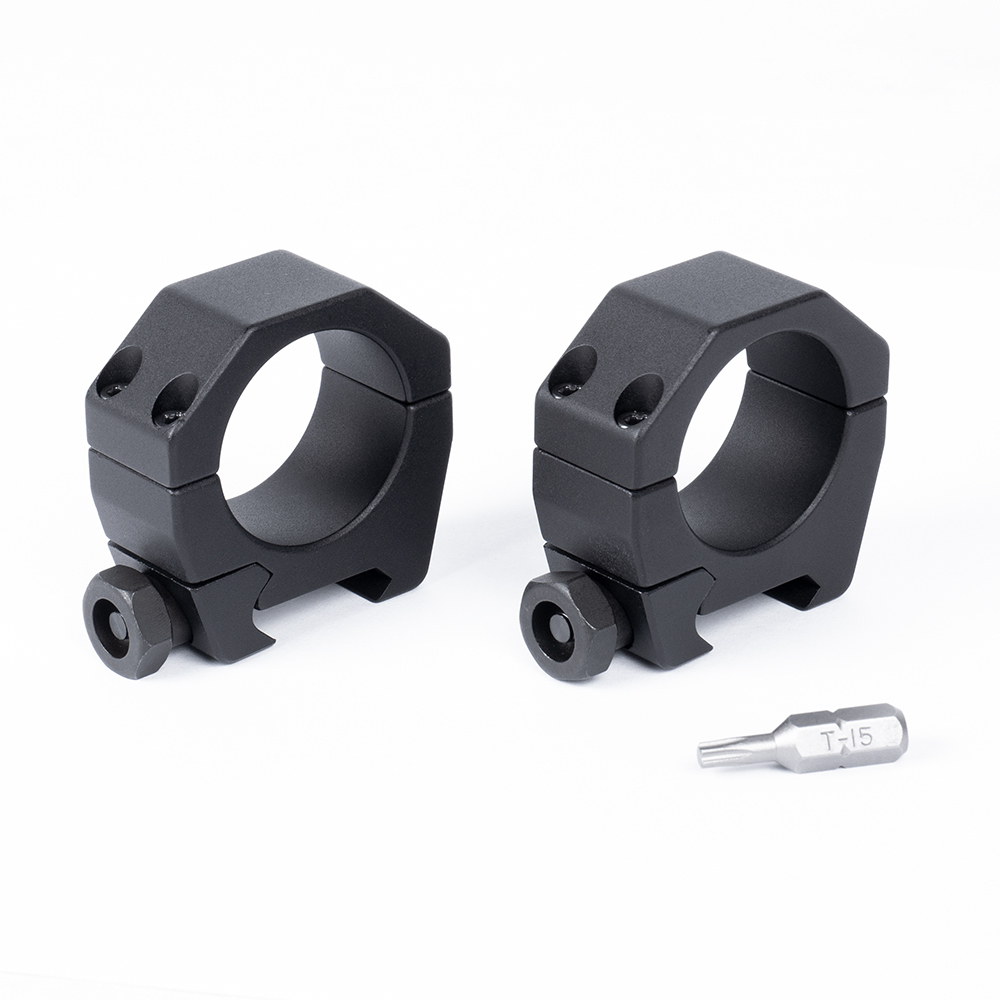
Keystone rings are CNC machined from 6061 aluminum and use Chromoly crossbolts to create a strong mechanical connection with Picatinny and Weaver-style rails. The streamlined horizontal-split design provides secure mounting without unnecessary weight.
The Keystone design has been tested on a .50 BMG platform without observed movement or zero shift during EGW testing.
- Available for 1-inch, 30mm, and 34mm scope tubes
- Multiple centerline heights for different rifle configurations
- Picatinny and Weaver-style rail compatibility
- CNC machined from 6061 aluminum
- Chromoly crossbolts
- Made in Quakertown, Pennsylvania
EGW HD Tactical Scope Rings
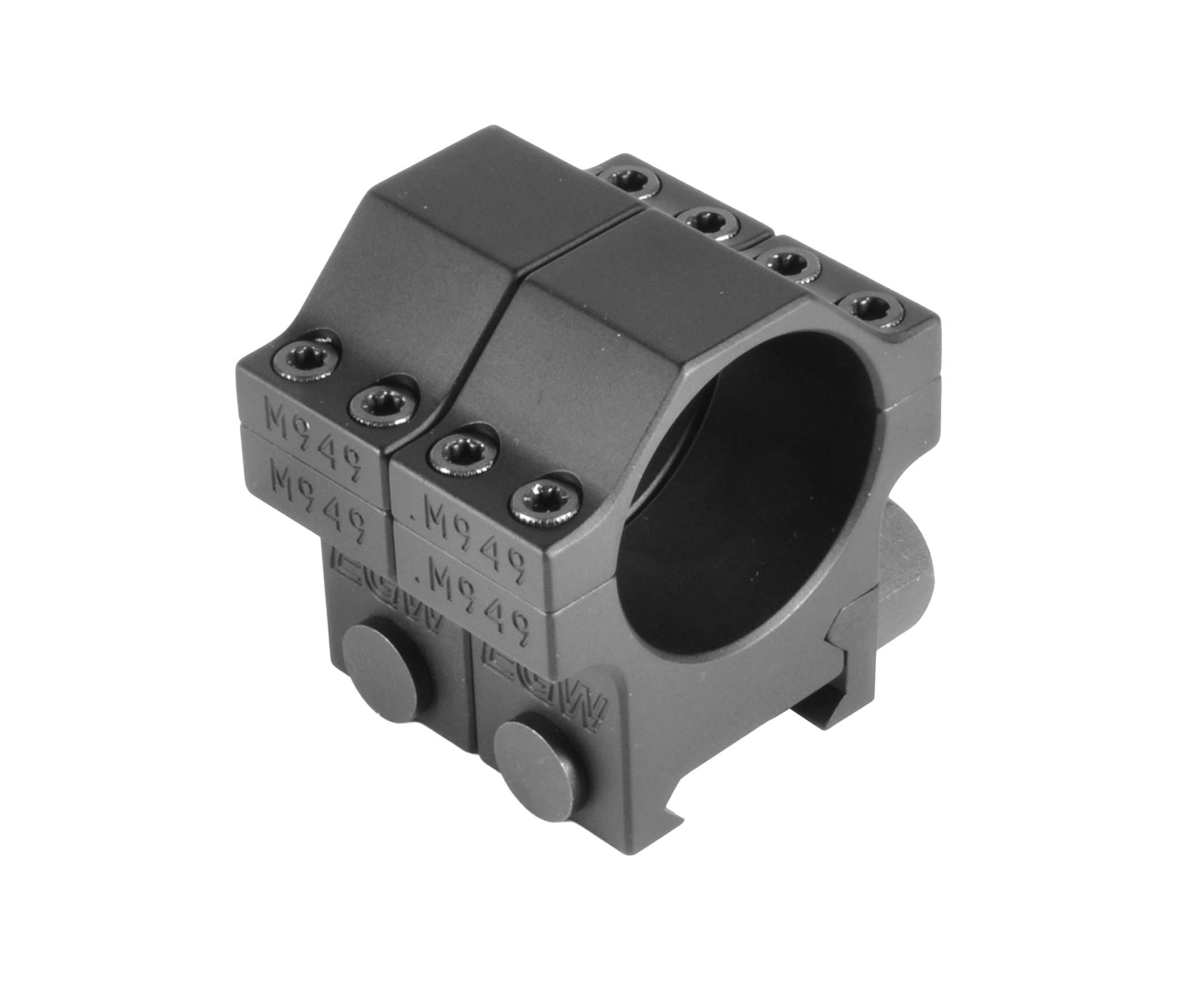
HD Tactical rings are machined and serialized as matched sets to maintain alignment between each ring's corresponding components. They use 6061 aluminum bodies and heavy-duty Chromoly crossbolts for demanding precision and heavy-recoil applications.
- Designed for 30mm scope tubes
- Serialized matched-set construction
- Designed for Picatinny rails
- CNC machined from 6061 aluminum
- Heavy-duty Chromoly crossbolts
- Available in three centerline heights
Keystone vs. HD Tactical Scope Rings
| Feature | Keystone | HD Tactical |
|---|---|---|
| Tube sizes | 1-inch, 30mm, and 34mm | 30mm |
| Construction | Streamlined horizontal-split design | Serialized matched-set design |
| Rail compatibility | Picatinny and Weaver-style | Picatinny |
| Best suited for | Hunting, precision, competition, and heavy-recoil rifles | Heavy-recoil, tactical, and demanding precision rifles |
Why Scope Rings Move Under Heavy Recoil
During recoil, the rifle accelerates sharply while the optic resists that movement because of inertia. Any looseness between the rings, rail, base, or receiver can allow components to shift. Common causes include insufficient crossbolt torque, an improperly secured scope base, oil or debris on mounting surfaces, uneven ring-cap torque, or hardware that does not properly engage the rail slots.
A secure optic installation depends on the complete mounting system. Even properly designed rings cannot compensate for a loose rail or incorrectly torqued hardware.
Installation and Torque for Heavy-Recoil Rifles
- Confirm that the firearm is unloaded before beginning installation.
- Inspect and clean the receiver, rail, rings, screws, and threaded holes.
- Install the scope base using the torque specifications provided for that specific base and firearm.
- Fully seat the rings against the appropriate recoil surfaces in the rail slots.
- Position the scope for proper eye relief before tightening the ring caps.
- Tighten the ring caps gradually and evenly while maintaining consistent gaps.
- Verify torque and zero again after the initial range session.
Frequently Asked Questions
Have Keystone rings been tested on a .50 BMG?
Yes. EGW tested the Keystone design on a .50 BMG platform without observing ring movement or a shift in zero during the test.
Are aluminum scope rings suitable for heavy recoil?
Properly designed and installed aluminum rings can be suitable for heavy recoil. The complete design, machining, crossbolt engagement, hardware, rail, and installation are more important than material alone.
Should I use thread locker?
Follow the instructions for the specific rings, scope base, firearm, and optic. Do not apply thread locker automatically unless it is recommended for that particular component.
What ring height should I choose?
Choose the lowest measured height that provides safe clearance and a comfortable cheek weld. Objective housing diameter, barrel contour, rail height, action length, lens caps, and rifle design all affect the required height.
Scope Ring Height Guide → Complete Scope Ring Selection Guide →